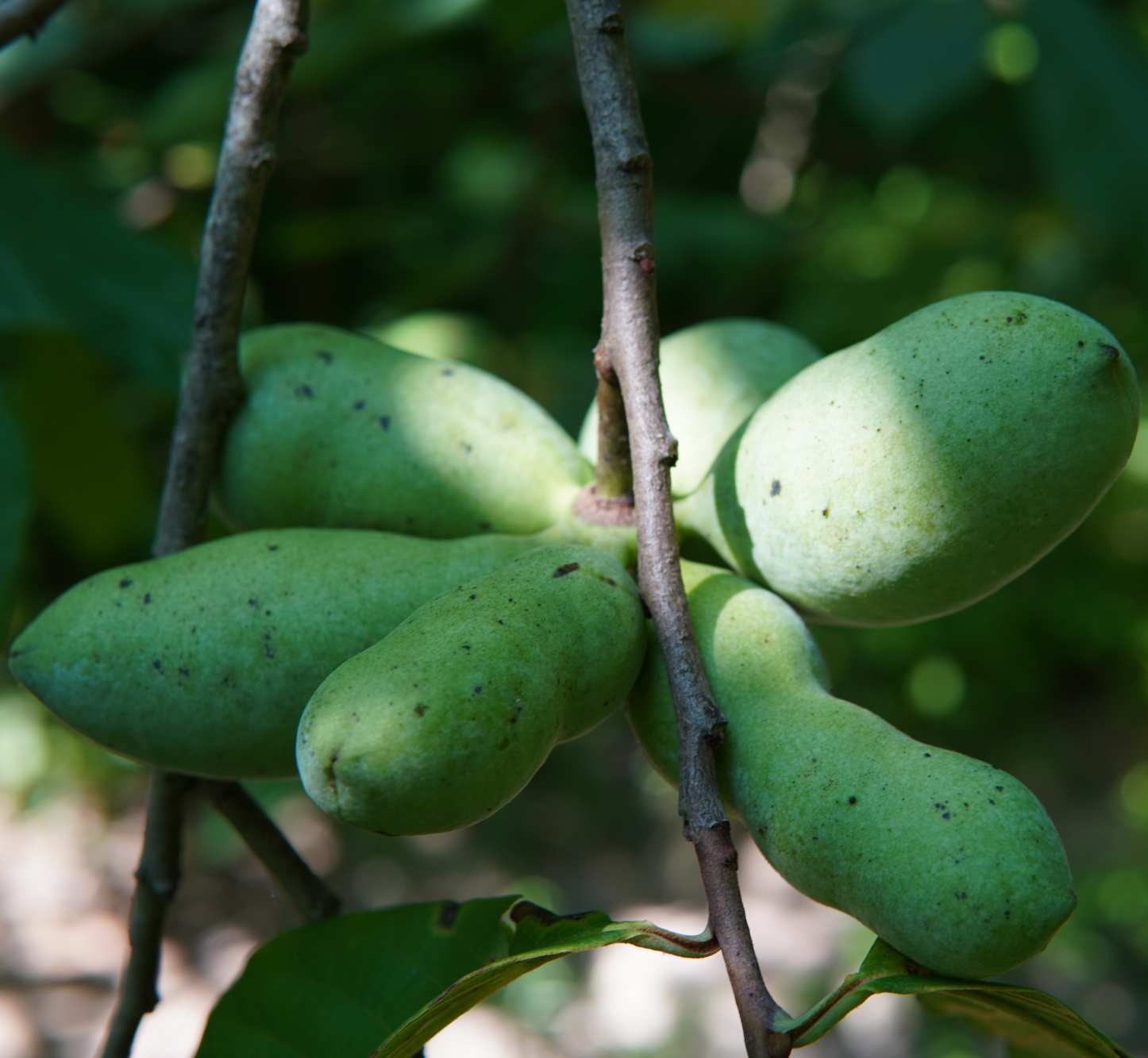
Pawpaw (Asimina triloba), is North America's largest native fruit. Although popular with foragers, it is sometimes overlooked as a viable commercial option in a forest farmed setting. This is because, although they grow well in fully shaded conditions, the amount of fruits that set and ripen can be quite low. For this reason, most commercially minded pawpaw growers establish their trees
in open fields under full sunlight.
Pawpaws are common
throughout Missouri, particularly in riparian areas. If you already have a healthy patch of pawpaw on your land, you may be able to do some light forest management to encourage better production. This allows you to produce pawpaw without the cost of establishing an orchard. Additionally, you can retain all of the wonderful benefits of an intact forest ecosystem. This is the beauty of forest farming!
One friend of the MWFFC has been doing exactly this. In 2019, Margot McMillan
(the landowner), hired a consulting forester to thin some of the midstory (smaller) trees and cut some of the smaller, weaker pawpaw stems. This treatment has favored the growth of the strongest pawpaw stems and has resulted in increased sunlight reaching the pawpaws.
Canopy gap created by midstory thinning in the pawpaw patch.
Although still lower than would be expected in full sunlight, the thinning has resulted in much higher fruit production than would be seen under dense closed-canopy conditions.
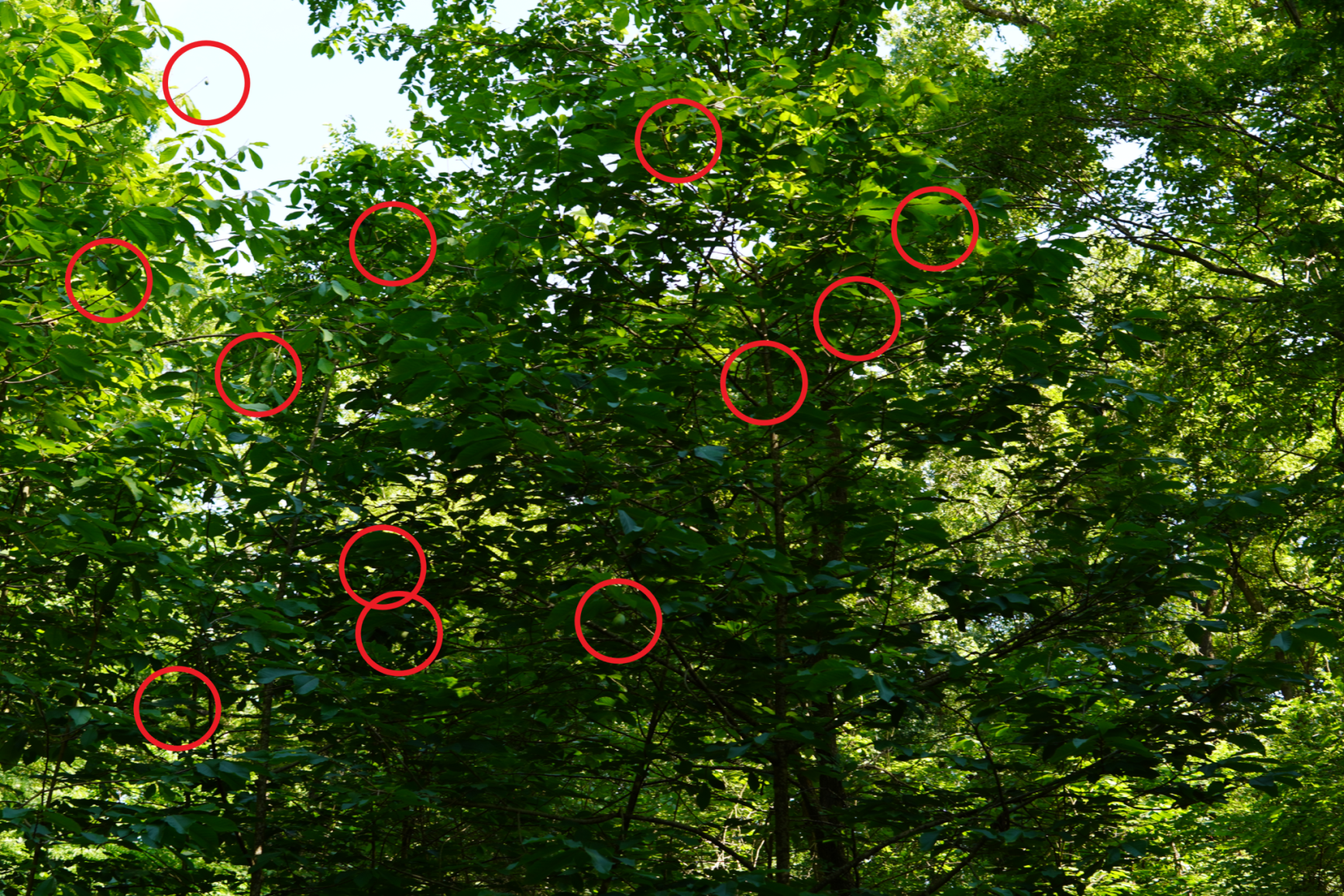
Thinning has led to markedly higher pawpaw production than would be expected under closed-canopy conditions (fruit clusters circled in red).
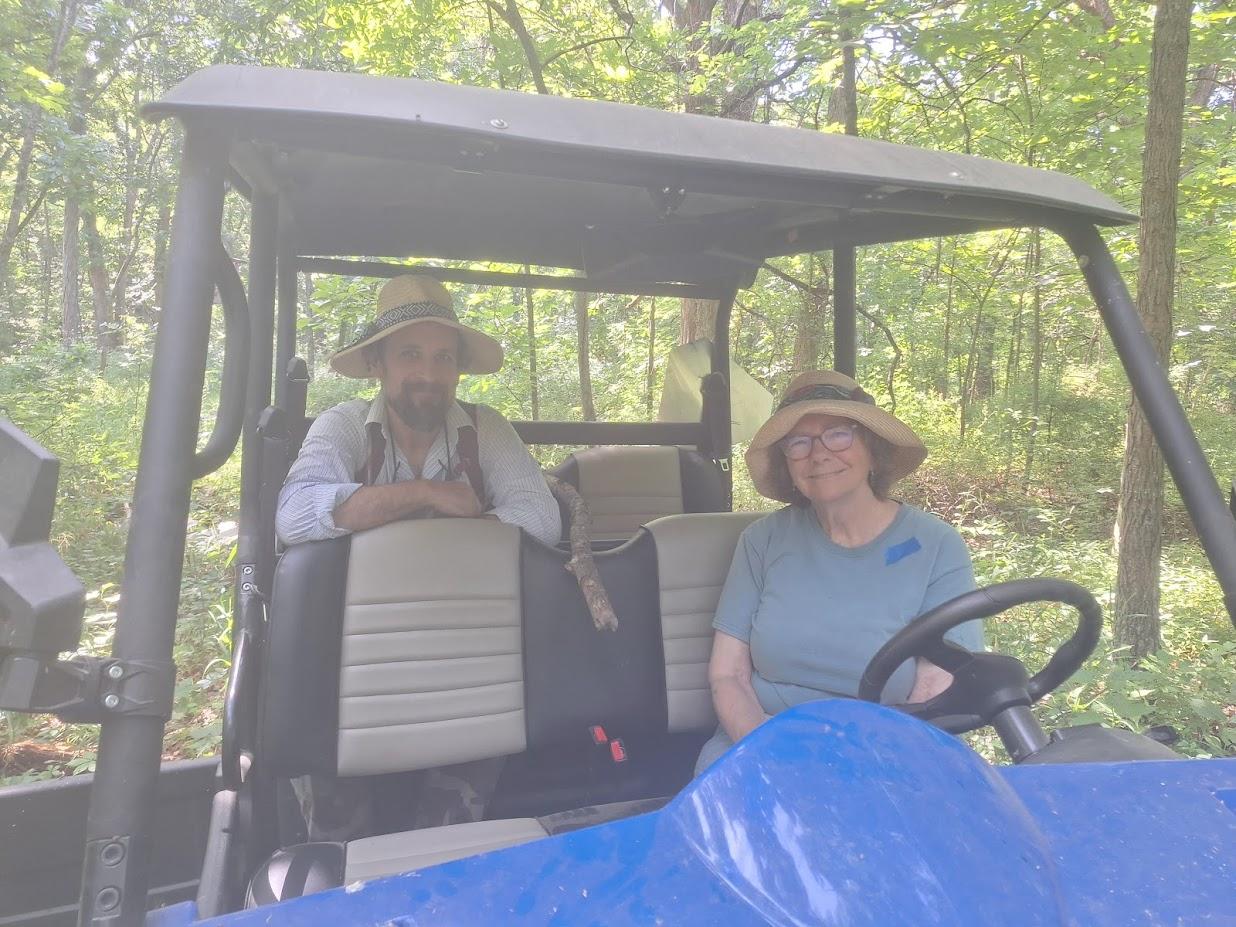
Consulting forester Josh Stevens (left) with landowner Margot McMillan
(right).
The response of the pawpaws has been remarkable since the thinning occurred 5 years ago, but according to consulting forester Josh Stevens, it might be time for another light thinning.
We are excited to continue learning about forest management for pawpaw production, and hope this example is inspiring to others looking to manage their pawpaw patches
Forest Farming Survey
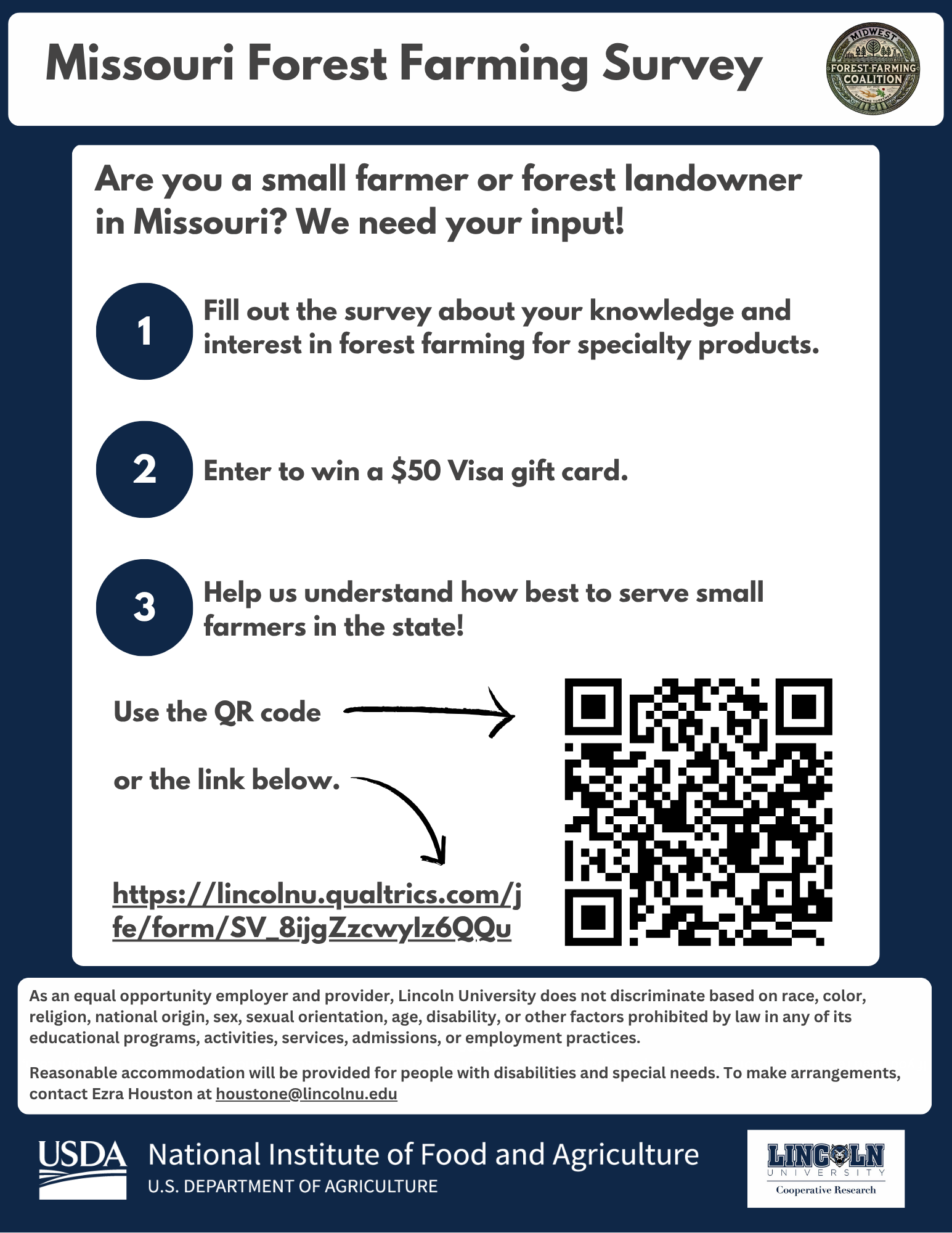
Are you a Missouri based small farmer or forest landowner? The Missouri Forest Farming Survey is still open, and we need your input!
Filling out this survey will help the MWFFC understand people's knowledge and interests about forest farming. The results from this survey will be used to assess how to best serve small farmers in the state.
Complete the survey now and enter to win a $50 Visa gift card!
Join us on zoom
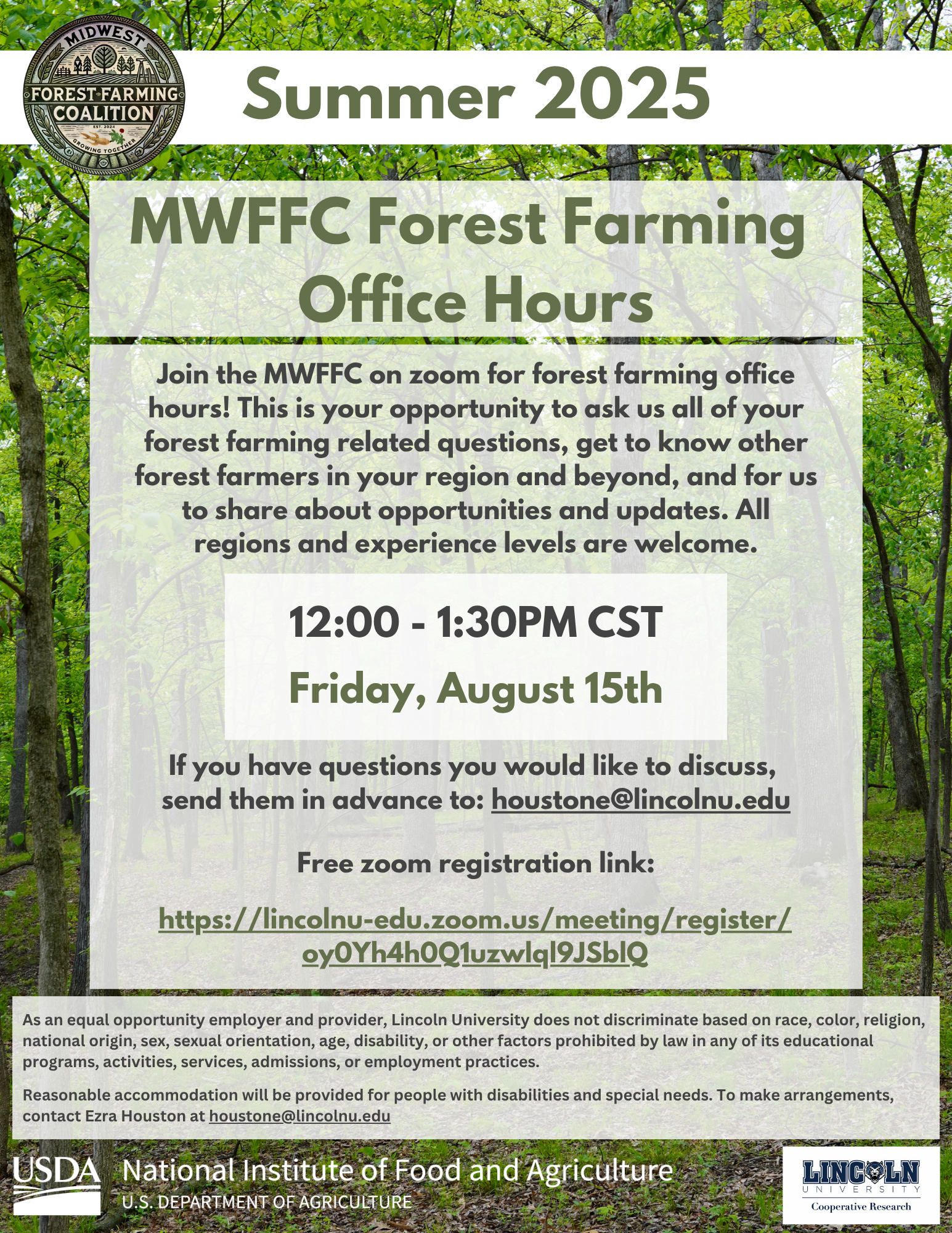
over the lunch hour on Friday, August 15th for our monthly forest farming office hours, where we will talk about forest farming, answer questions, and connect with farmers in the region and beyond. This is a great opportunity to learn and expand your network.
Register for our August office hours using the link below. The registration link is also posted on our website. See you there!
Click the link
below to register via zoom. If you have specific questions you would like to discuss, send them in advance to [[email protected]].
Join our friends at Mountain Jewel Land Project for a workshop focused on successful goldenseal cultivation.
Topics
covered include tracking successful site conditions through embodied observation (the best way to learn- books only take us so far), practicing honorable root digging and planting, and you’ll get some rhizomes to take home to start your own patch.
Reserve your spot by purchasing a ticket on ozarkmountainjewel.com (or RSVP to reserve and pay in person). Directions to Mountain Jewel (located in Ozark County, MO) upon purchase. Looking forward!!
This event
is not affiliated with the Lincoln University of Missouri, but will be hosted by our friends at Mountain Jewel in Ozark County, MO.
Our friends at Grovewood Farms are happy to offer ramp seeds this season. Grovewood Farms is operated by Julia
Donovan, a fourth generation farmer, working her 20 acres of Sugar Maple forest in Suttons Bay, Michigan. The understory has been undisturbed for more than 100 years, resulting in a carpet of beautiful ramps.
If you are interested in seeds please email Julia at [email protected] or give her a ring/text at 440.382.6593.
Call for Vendors
Are you a Missouri-based forest farmer or business owner selling non-timber forest products? You're invited to set up a vendor
booth at the University of Missouri Center for Agroforestry Chestnut roast on October 18th from 10:00am - 3:00pm. Contact Gina Beebe at [email protected] for details.
 Pawpaws are common
throughout Missouri, particularly in riparian areas. If you already have a healthy patch of pawpaw on your land, you may be able to do some light forest management to encourage better production. This allows you to produce pawpaw without the cost of establishing an orchard. Additionally, you can retain all of the wonderful benefits of an intact forest ecosystem. This is the beauty of forest farming!
Pawpaws are common
throughout Missouri, particularly in riparian areas. If you already have a healthy patch of pawpaw on your land, you may be able to do some light forest management to encourage better production. This allows you to produce pawpaw without the cost of establishing an orchard. Additionally, you can retain all of the wonderful benefits of an intact forest ecosystem. This is the beauty of forest farming!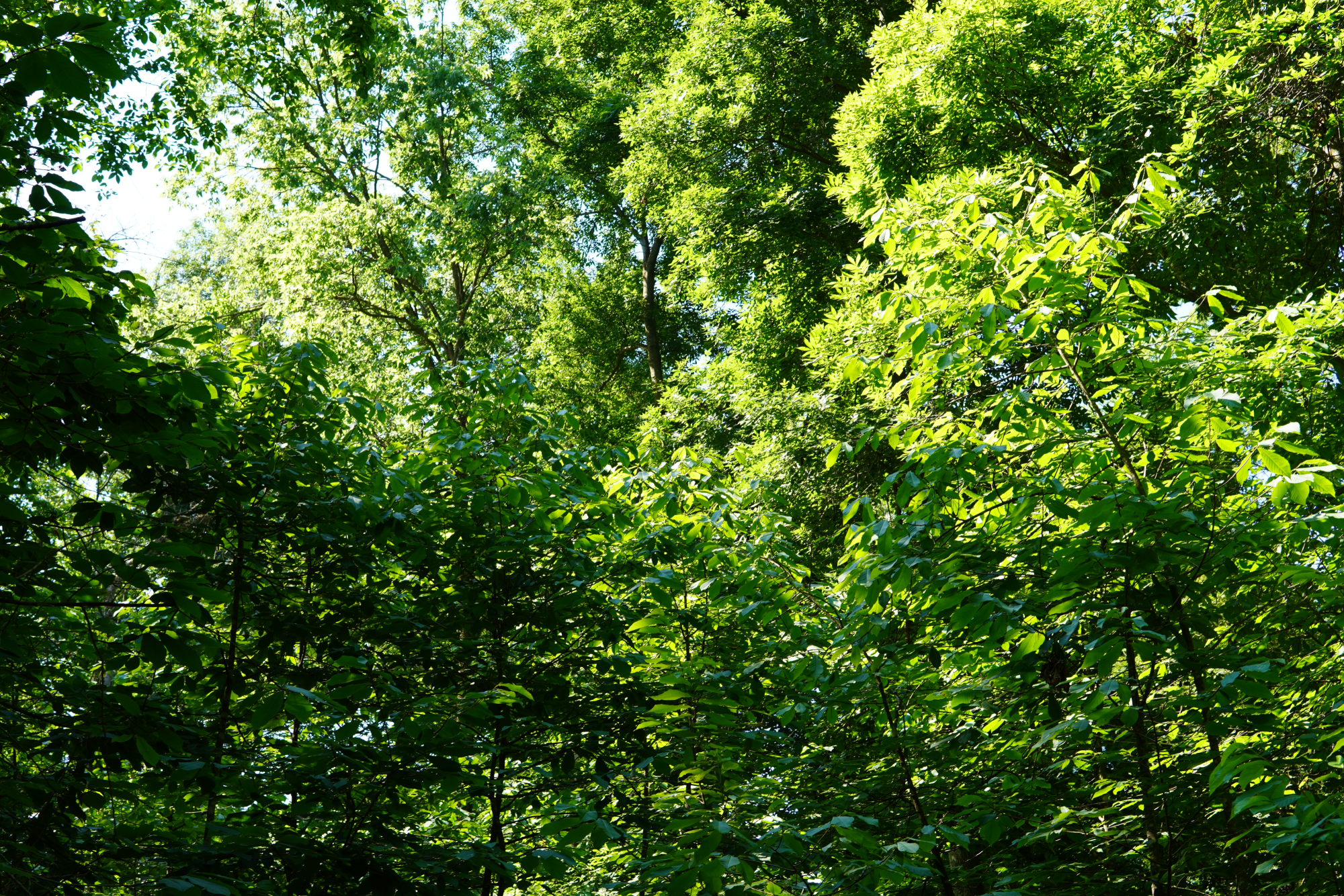
 Join our friends at Mountain Jewel Land Project for a workshop focused on successful goldenseal cultivation.
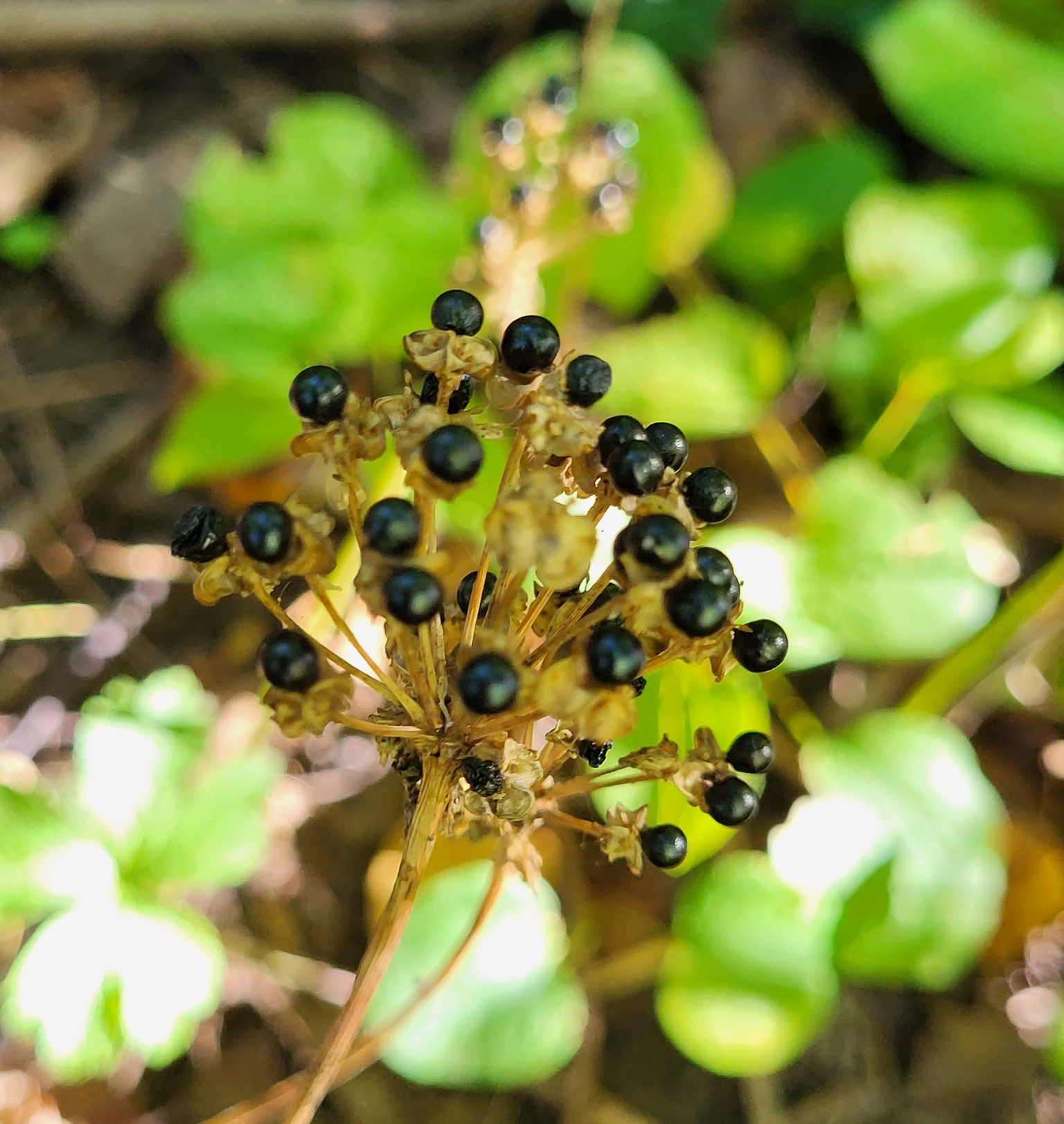 Our friends at Grovewood Farms are happy to offer ramp seeds this season. Grovewood Farms is operated by Julia
Donovan, a fourth generation farmer, working her 20 acres of Sugar Maple forest in Suttons Bay, Michigan. The understory has been undisturbed for more than 100 years, resulting in a carpet of beautiful ramps.
Our friends at Grovewood Farms are happy to offer ramp seeds this season. Grovewood Farms is operated by Julia
Donovan, a fourth generation farmer, working her 20 acres of Sugar Maple forest in Suttons Bay, Michigan. The understory has been undisturbed for more than 100 years, resulting in a carpet of beautiful ramps.  Are you a Missouri-based forest farmer or business owner selling non-timber forest products? You're invited to set up a vendor
booth at the University of Missouri Center for Agroforestry Chestnut roast on October 18th from 10:00am - 3:00pm. Contact Gina Beebe at
Are you a Missouri-based forest farmer or business owner selling non-timber forest products? You're invited to set up a vendor
booth at the University of Missouri Center for Agroforestry Chestnut roast on October 18th from 10:00am - 3:00pm. Contact Gina Beebe at